iPalm: Building a Stronger Identity Authentication Framework for Examinations
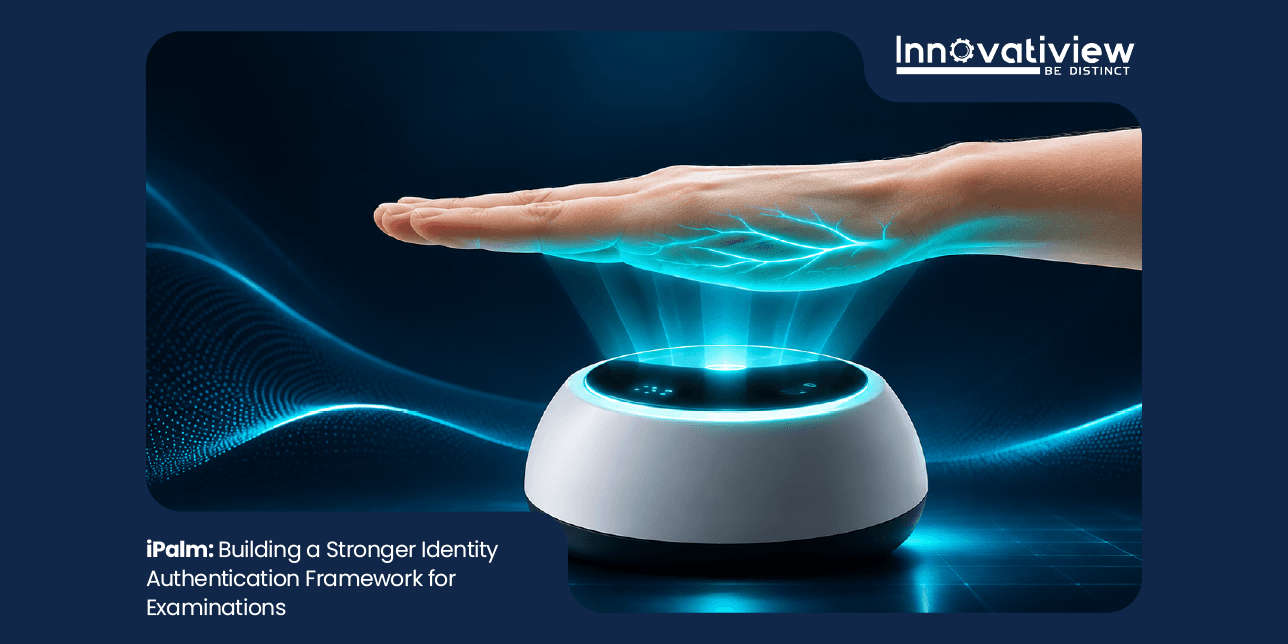
In an era where the integrity of high-stakes examinations is paramount, accurate candidate identification has become a critical part of examination management. With millions of candidates appearing for competitive examinations across the country, examination authorities need reliable verification mechanisms that can help prevent impersonation, minimise identity fraud and strengthen the overall security framework.
While conventional identity verification methods play an important role, evolving security challenges call for more advanced and reliable biometric technologies. Palm-vein recognition is one such innovation, offering an additional layer of identity verification through the analysis of palm print and unique vein patterns beneath the skin.
iPalm, a proprietary palm-vein scanning solution of Innovatview with exclusive rights for usage in India, brings an advanced dimension to biometric identity verification, helping examination authorities strengthen candidate authentication and support more secure examination processes.
Understanding Palm-Vein Recognition Technology
Unlike conventional biometric methods that analyse visible physical characteristics, palm-vein recognition scans the palm print and internal vein patterns of an individual.
These patterns are unique to each individual and provide a distinct biometric reference for identity verification. By scanning and analysing the vein structures beneath the skin, the technology enables identity authentication using an internal biological characteristic.
Since the verification is based on internal vein patterns rather than external features, palm-vein recognition offers an additional biometric dimension to identity verification systems.
Beyond Conventional Biometrics: Exploring Palm-Vein Recognition
In large-scale examinations, even a small gap in candidate verification can create significant security challenges. Impersonation, identity substitution and discrepancies in candidate authentication can compromise the fairness and credibility of an examination.
Palm-vein recognition can help address these challenges by strengthening the biometric verification process.
Some of its key advantages include:
1. Unique Biometric Identification
Palm-vein patterns provide an individual-specific biometric characteristic, supporting accurate candidate authentication.
2. An Additional Layer of Security
Palm-vein scanning can complement existing biometric verification methods, creating a more comprehensive identity verification framework.
3. Internal Biometric Authentication
Unlike methods that rely on visible surface characteristics, palm-vein recognition scans palm prints and internal vein structures, adding another dimension to biometric security.
4. Enhanced Examination Integrity
By strengthening candidate identity verification, the technology can help examination authorities address impersonation risks and maintain greater confidence in examination processes.
5. Integration into Multi-Modal Verification Frameworks
Palm-vein recognition can form part of a multi-modal biometric ecosystem, working alongside technologies such as facial recognition, fingerprint scanning and iris recognition.
The Future of Biometric Verification Is Multi-Modal
No single verification method should be viewed in isolation when addressing the complexities of large-scale examinations. A comprehensive security framework requires multiple layers of authentication, supported by technology that can adapt to evolving operational requirements.
The integration of facial recognition, fingerprint scanning, iris recognition and palm-vein recognition can help create a stronger, multi-modal biometric verification ecosystem.
By expanding the scope of biometric authentication through solutions such as iPalm, Innovatiview continues to advance the role of technology in examination security and surveillance.
As examination systems become increasingly technology-driven, innovations in biometric identification will remain essential to strengthening candidate authentication, reducing identity-related risks and safeguarding the credibility of examinations.