Manual vs Tech-Enabled Frisking: Why Handheld Detectors Are No Longer Enough
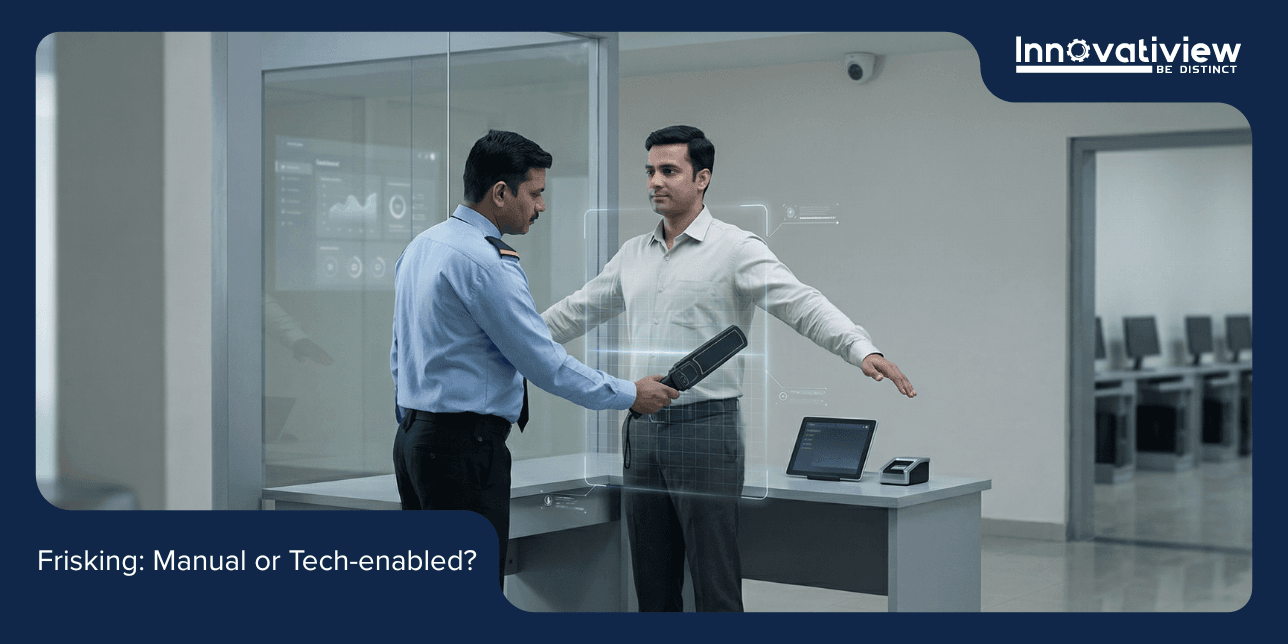
As India’s examination ecosystem scales in volume and complexity, the definition of exam security is changing. Innovatiview, as a leading provider of examination security solutions, has witnessed a clear shift in how examination authorities evaluate frisking and entry control. What was once a manual, guard-dependent process is now expected to be technology-driven, auditable, and resistant to human error. Handheld metal detectors alone no longer meet the security expectations of high-stakes examinations.
Context in India
India conducts millions of examinations annually across recruitment, admissions, and academic assessments. With rising competition and increasing use of sophisticated cheating devices, examination authorities face pressure to ensure absolute fairness.
Traditionally, frisking has relied on physical guards supported by handheld metal detectors. While this approach plays an important role, it remains vulnerable to fatigue, inconsistency, and lack of accountability. Miniaturised electronic devices such as Bluetooth earpieces, smartwatches, and concealed mobile phones have made manual frisking increasingly unreliable.
Courts, regulators, and candidates now expect examination bodies to deploy security systems that are consistent, transparent, and verifiable. This has made technology-enabled frisking a necessity rather than an option.
Limitations of Manual Frisking and HHMDs
Manual frisking is inherently dependent on human judgment. Guard alertness can vary across shifts, centres, and under different levels of crowd pressure. In large-scale exams, where thousands of candidates enter within limited time windows, the risk of oversight increases significantly.
Handheld metal detectors improve detection but remain standalone devices. They provide no central visibility, no real-time reporting, and no audit trail. Once a candidate clears the checkpoint, there is limited proof that frisking was conducted thoroughly or uniformly.
From a cost perspective, heavy reliance on man guarding increases recurring expenditure without guaranteeing proportional security outcomes.
Why Tech-Enabled Frisking Is Now Essential
Technology-enabled frisking introduces structure, traceability, and data-driven oversight into the entry process. When frisking activity is logged digitally, examination authorities gain visibility into compliance across centres and time slots.
Integration with CCTV surveillance and biometric systems strengthens deterrence. Every frisking action becomes accountable, reducing the scope for collusion or negligence. Real-time dashboards allow command centres to identify anomalies and intervene instantly.
This hybrid model aligns physical security with digital monitoring, ensuring that frisking supports rather than weakens overall examination integrity.
GuardView by Innovatiview
GuardView is Innovatiview’s two-layered frisking solution designed for modern examination environments. It combines physical frisking with technology-driven oversight to close the gaps left by manual processes.
GuardView deploys handheld metal detectors for rent, supported by a connected application that records real-time frisking status. The system detects prohibited items, including mobile phones, Bluetooth devices, smartwatches, and other electronic devices.
By digitising frisking activity, GuardView creates an auditable trail that examination authorities can monitor centrally. This improves compliance, reduces dependency on individual guards, and strengthens confidence in entry-level security.
Innovatiview seamlessly integrates GuardView into surveillance, attendance counter, and command centre operations, creating a unified security ecosystem.
Impact on Examination Fairness
Tech-enabled frisking directly contributes to a level playing field. Candidates trust the process when entry checks are uniform and transparent. Institutions reduce reputational risk by demonstrating proactive governance and the use of modern security tools.
For examination bodies, this approach lowers long-term costs by optimising the workforce while improving security outcomes.
Conclusion
Manual frisking and standalone handheld detectors are no longer sufficient for high-stakes examinations. The evolving threat landscape demands technology-enabled, auditable, and integrated frisking solutions.
Innovatiview’s approach recognises frisking as the first critical checkpoint in examination security. By combining human vigilance with digital accountability, institutions can protect examination integrity, reduce risk, and reinforce public trust. In today’s environment, tech-enabled frisking is not an upgrade. It is a necessity.